Ann Richardson, Author - My Books and Other Matters
  • Home
  • About Me
  • My Books
    • The Granny who Stands on Her Head
    • Wise Before Their Time
    • Life in a Hospice
    • Celebrating Grandmothers
  • My Substack
  • Talks
  • Contact Me
Life in a Hospice, Publicity and Selling Books

Queen for a Day

June 2, 2018 by Ann Richardson No Comments

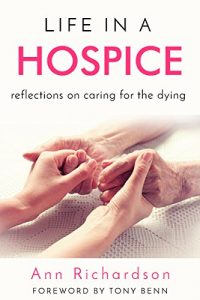
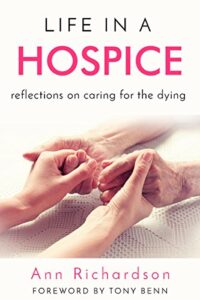
Life in a Hospice by Ann Richardson

On a complete whim, I applied for a BookBub promotion for Life in a Hospice a few weeks ago and, much to my surprise, got it. I thought they were interested in crime or romance books – not serious books about end-of-life care. But happily I was wrong.

For the uninitiated, a BookBub promotion means you pay them (BookBub) a not trivial amount of money ($142 in my case), lower your ebook price to 99c/99p on one agreed day and wait to see what happens. Sounds crazy, but it can work (and it did in my case). It is very easy to apply (and no charge), but not everyone gets accepted. Among authors, it is seen to be a great honour to get it.

You can apply for the US (but it costs a lot more), so I took the less risky route of applying for the promotion to take place in the UK, Canada and Australia. I lowered the price for a week beforehand – and did what I could to tell potential readers I had done so. I sold about thirty before the actual day.

The actual promotion day is very exciting because you can clock Kindle sales in real time. Two hours after it  had started, the book was already up to 60+ sales, then a bit after it was over 100 and on and on. I did take plenty of time away from my computer, but it was very compelling to keep having a peak. Sales on the other channels did not show up immediately and were a delightful surprise when they were displayed the next day.

BookBub said I could expect 300 sales (presumably, an average for the category) during the one-day promotion. In fact, I sold 401 books, mostly through Kindle but 76 via Kobo/Apple. Most were sold in the UK, but c 100 were sold in Canada and c 50 in Australia.  With an additional twenty or so sold in the days after the promotion at the normal price (presumably by people who don’t get their act together quickly enough or who respond to a friend’s recommendation), I sold about 450 copies altogether.

It doesn’t make a lot of money, as you pay for the promotion, and you make only 35p from each sale at 99p. My break-even point was 300, so I made a small profit.

BUT what I did see, which I had forgotten about, is a huge jump in the Amazon rankings. The book went up to #1 in three categories in the UK (including ‘nursing’ and ‘death & grief’), listing for the time as ‘#1 best seller’, and very high also in the US (although the book wasn’t officially on sale there, I had reduced my price in case people were looking). And the overall ranking (eg of ALL kindle sales) jumped hugely. My favourite was that the book was ranked #8 in Canada of ALL kindle books. I thought it was wonderful that a serious book about hospice care could be so high in any such list! It fell quite quickly, of course, but I did feel like Queen for a Day.

So if you are a writer, it is well worth applying, especially as it is free to do so. I am told that if you are turned down, you can apply again. I know one man who applied 12 times before he got it. Good luck.

If you want to buy Life in a Hospice, it is available on Amazon at 

getbook.at/Hospice

or on other channels at

https://www.books2read.com/u/bpWk0z


Share:
Reading time: 2 min
Celebrating Grandmothers, Grandmothers

“The Best Club in the World”

May 11, 2018 by Ann Richardson No Comments

The-Best-Club-in-the-World

“I had a card from a close friend who is a granny which said, ‘Welcome to the best club in the world!’ And it’s just how it felt.

You have the best deal because you have the pleasure of the children without that relentlessness and anxiety and responsibility. It’s such a privilege – you feel such an important part of a team, you are a necessary support. It gives your life shape and meaning.”
…from Celebrating Grandmothers

These are the words of a thoughtful grandmother of two. And she sums up the situation for me very well. Yes, being a grandmother means being in one of the best clubs in the world. As well as, in my case, a surprise as I had no such expectation.

She is right about the pleasure of the children – and what a pleasure it is. My two grandsons are as different as they could be, but each is a delight in his own way. I always look forward to my time with them, whether for an afternoon or a sleepover. I love to hear their thoughts and views of the world.

But it is also wonderful not to have the principal responsibility. You do worry from time to time, but mostly you enjoy them and then give them back. You can even indulge them if you are in the mood.

And yes, it is about the family being a team. The role of grandparent often brings the role of advisor, supporter and general helper to the parents. This is highly important for all concerned.

And finally, yes it gives life a meaning that it didn’t have before. Of course, you may have many other interests, but you certainly think a lot about the grandchildren.

Aren’t we grandparents lucky!


Would you like to read Celebrating Grandmothers?  Go to: getbook.at/Grandmothers


This was originally published on the website of The GrandparentHub (https://thegrandparenthub.com/best-club/).


Share:
Reading time: 1 min
Life in a Hospice

Does Net Galley Work?

May 9, 2018 by Ann Richardson No Comments

Life in a Hospice by Ann Richardson

We all want reviews – lots of them and good ones. Some of us write in popular genres, have long email lists and no problem getting reviews in their many tens or more. The rest of us struggle – we ask our friends, our dentist and anyone we can think of until they look a bit bored.

That’s why I want to tell you about my experiences on NetGalley. I decided, as a micro-publisher, to place one of my books on it earlier this year as it has serious reviewers – librarians, journalists, academics and others who love to read – and, from my experience, they write thoughtful reviews.

I write books that don’t fit easily in any genre – based on confidential interviews, they enable people to talk about their lives in their own words and from the heart. The one I placed with NetGalley through BooksGoSocial, Life in a Hospice, is about nurses and others working in end-of-life care. And what happened? In one month, I received 12 reviews, of which 10 were 5 star.

But best of all, they were perceptive – not dashed off to meet a need, but aiming to communicate what the book is about and what it did for them. Here are just a few excerpts, to give you a ‘feel’:

“A brave book – not afraid to confront both the sadness and opportunity that comes from working with people at the end of their lives.”

“As the child of two elderly parents, this is a subject I think of almost daily: this book will make it a LOT EASIER to deal with.”

“As a hospice volunteer, I know well the beauty that can occur at the end of life…beautifully written and thoughtful…”

“It makes you realize that the troubles in your own life are not as important as those dealing with their own mortality…You take an inventory of your own life.”

“I was moved and overwhelmed by the care, compassion and honesty portrayed…This amazing book truly demonstrates the wondrous gift of a good death.”

BGS offers a placement with NetGalley at a bargain price. Why not have a go?

Find out more:
On Amazon |  At the Apple iBooksetc |  

This was originally published on the BooksGoSocial website (https://booksgosocial.com/2018/05/09/does-netgalley-work/)

Share:
Reading time: 1 min
Life in a Hospice

Life In A Hospice – Hey You!

May 6, 2018 by Ann Richardson No Comments

Life in a Hospice by Ann Richardson

Hey you – yes you! I see you rushing off. You see the word ‘hospice’ and you think death, gloomy, morbid – not for me. You search for a good crime novel instead. No death there, of course.

But Life in a Hospice is anything but gloomy. It is a book of stories, told from the heart. And from all sorts of viewpoints. Perhaps the most important word is “life”.

You want a story with a bit of love? There’s more love in a hospice than anywhere in the world. You have an urge to be moved? Yes, of course, when talking about the end of life, that goes without question.

You want to see the complexity of human relationships? For sure, that is there in abundance. Some humour? You won’t be disappointed. You may be surprised.

Life in a hospice shows what it is like to work in a hospice and, by extension, what it is like to be a hospice patient or visiting relative. It is told in their own words by nurses, assistants, chaplains, doctors, managers and even a very thoughtful hospice cook.

They tell of the withdrawn woman who blossomed under the care of the day centre. There is the man who asked to die under a tree – and they arranged it. There are the two young daughters who asked for their father to be buried with some cigarettes and a can of lager. Throughout, there is the enormous sense of ‘privilege’ to be working in a hospice.

Yes, it is about death and dying, but as you’ve never seen it before. Hospices are teeming with life – with love, laughter, arguments and tears. To quote a cliché, “all life is there”.

And if, perchance, you are wondering where you should go when your last days or near – or, indeed, are helping a relative or friend to find such a place – you will be enormously reassured.

Reviews? You can bet they were excellent.

Now maybe that was worth staying for.

Amazon: http://myBook.to/Hospice

Other e-books: https://www.books2read.com/u/bpWk0z


Share:
Reading time: 1 min
Stories from my life

An Encounter In Rome – A True Story

April 24, 2018 by Ann Richardson No Comments

This is a true story. Improbable, but true.

It was a few years ago. My husband, Ray, and I were staying in central Rome for ten days. It wasn’t our first visit, but we did many of the usual things – going to churches and galleries, having a very memorable trip to the Vatican at night, and just walking around.

One day, we had gone out for lunch at a local restaurant – a rather old fashioned place. It had been in the same location for decades, perhaps with the same classic menu, and there were numerous waiters in black uniforms. I can’t remember now what it was called or what we ordered, but the food was reasonably good.

The tables were close together by English standards. Our two-person table was next to another, with only a small space in between, presumably so that they could be easily joined for a group of four. As a result, we became increasingly aware of a man, probably a little older than us, sitting alone at the table just to the side of ours. He was well dressed, with a confident air and an intelligent face. He seemed to be known to the restaurant staff.

We had been married for years and had a very easy way of chatting about all kinds of things, from what we had been seeing in Rome to our grandchildren, the current news and much else besides. I wondered how much this man could hear of what we said, but nothing was so confidential that it mattered much.

Sometime around the point when we had finished our second course and were ordering coffee, the man made eye contact with us. He made a comment about the food or the restaurant or something similar of no great importance. He spoke in good English, although it was clearly not his native language.

But this had broken the ice. He asked where we were from. When we said London, he told us that he loved London, especially the gentlemen’s clubs around St James. This was not part of our world, but we smiled to be agreeable. He mentioned that one of his sons worked in London and he liked to visit from time to time.

He then told us he was from a country in South America (which shall remain unnamed to preserve his anonymity) and was a former Supreme Court judge there. I wondered briefly if I should believe this, but decided why not. It seemed an unlikely detail to invent. He had apparently been forced out when the then President came to power and had moved hurriedly to Europe. Most of his time was spent in Rome, but he travelled around to England and other countries.

There was some mention of a wife and four or five grown up children, but it did not sound like he had much contact with them, even his wife. Indeed, he seemed a slightly forlorn figure, eating alone – perhaps frequently – in a foreign city.

He asked about us. How long had we been married? Did we have children? What were we doing in Rome? All reasonably innocuous. Most of this was directed to Ray, possibly because he was more comfortable talking man-to-man or perhaps simply because the configuration of our seating meant that he was more within direct eye-contact.

And then suddenly the conversation took a very different turn. He said it looked like we loved each other and stopped briefly to check for confirmation. Ray, although normally reticent like most Englishmen, said yes, we did. I think I nodded or murmured some agreement.

Would you mind my asking, said this stranger, but what do you mean by love?

The atmosphere shifted. This was not a light-hearted question, but a serious question from a serious man. We knew it, he knew it and he knew we knew it. Perhaps he was trying to work something out in his own mind.

I could see Ray beginning to reflect, to search for an answer. That’s a difficult question, he said, buying a little time. Yes, was the quiet reply.

Ray is a thoughtful man and not afraid of difficult questions. As an academic, he is used to them. But this was definitely not part of his lunch plans.

Well, he began, looking back I’m not at all sure that I was in love when we first married. Of course, I was strongly attracted for many reasons, but I didn’t understand then what love was. I was much too young and un-formed. And my mind was on other things, mostly myself and where I was going. Had I been asked what love meant, my answer would probably have focused on my wife’s special qualities.

But now, he continued, I feel that love is something that develops slowly over time. It requires a period of growing into maturity. It’s something to do with wanting what is good for my wife – to be willing, if necessary, to sacrifice my own interests in order to help her. Of course, I may also benefit from doing that, but I would do it even if I didn’t.

I want –very deeply – for her to be happy and fulfilled. It’s in this same way that I also love my children and grandchildren.

All of this was said over some time in a slow and thoughtful way.

I’m not a weepy person or a sentimental one. I don’t weep in the opera or when watching a touching movie. But here was my husband trying to explain his love for me, right in the middle of a public restaurant in Rome. My eyes definitely misted up. There was nowhere, anywhere, except these two small tables.

Ray said later that the judge’s eyes were also moist. He had looked lost in thought, perhaps seeing what might have been absent from his own marriage.

The table became rather quiet. The judge said something to the effect that he wasn’t sure he had ever experienced this. We slowly went back to more normal conversation.

At some point, the waiter came for the bills and they were paid. This has been a very interesting discussion, the judge said. We could have taken contact details and continued the conversation elsewhere – after all, he said he came to London from time to time. But I made a calculation that we were not likely to have that much in common and a future relationship was unlikely to thrive. Perhaps he thought so, too.

We shook hands and left the restaurant separately. We did not even know his name.


I am currently writing a series of short stories based on meaningful moments in my life, to be published as a book in early 2019 (or sooner). This is the first one to be published in any way. It won Stevie Turner’s Short Story contest at the end of April 2018.  For further information, see my website www.annrichardson.co.uk.

Steve Turner's Short Story Contest

Share:
Reading time: 5 min
Life in a Hospice

One Five Star Review After Another

April 24, 2018 by Ann Richardson No Comments

Life in a Hospice by Ann Richardson

Life in a Hospice was initially published in 2007 with some good reviews and an endorsement from the British Medical Association. But despite its continuing relevance to people everywhere, it fell into a fallow period, with few sales and certainly no more reviews.

Imagine my pleasure, then, when I find that the relaunched version (a year ago, spring 2017) is selling well and getting one excellent review after another.

Some of these come from people who know about hospice care already:

“As a Palliative Care physician working in the hospice setting, this book was a great help to me in many ways. It helped me really understand and relate to the many roles and perspectives within the hospice, from the chef to the nursing staff in an open honest way. It helped me see other coping mechanisms and struggles and truly re-inspires me as to the good work being done.” Matt (on Amazon.co.uk)

“As a hospice volunteer, I well know the beauty that can occur at the end of life. This book is a beautifully written and thoughtful explanation of much of what occurs in a hospice.”  Janice B. (on NetGalley)

Some come from people whose own personal lives are touched by its contents:

“What a beautiful but complicated book. As the child of two elderly parents, this is a subject I think of almost daily: this book is going to make it a LOT EASIER to deal with. The advice is smart and just and should be easily understood by any level of reader. A great sourcebook for people who are or may be dealing with this subject.”  Janet C. (on NetGalley)

And some could see it might be a help in the long run

“This is an absolutely wonderful book. It’s a must-read for everyone, especially those who are not yet aware of the fact that death is an inevitable part of life. The way people in hospice care are dealing with this is, as strange as it sounds, wonderful and it may come as a surprise that it is not all darkness and gloom.” An avid reader (on Amazon.co.uk)

It does a writer’s heart good to see such a welcome for her hard work and commitment.

Share:
Reading time: 1 min
Celebrating Grandmothers, Grandmothers

Becoming a Grandparent

April 14, 2018 by Ann Richardson No Comments

Becoming a Grandparent

New parents often exclaim that no one told them about the strong and complex emotions that come with parenthood. Yes, they were told about coping with labour and perhaps something about baby feeding and equipment. But it is the emotional side that is so important.

Well, the same can be said for becoming a grandparent. Of course, we all know that when a son or daughter is expecting a baby, the birth of that child will make us a grandparent. But how many of us have any idea what this will mean for us, both immediately and over time?

Certainly, I was bowled over!

I am the grandmother of two boys, now aged eight and twelve. This began twelve years ago, when my daughter went into a difficult labour and ended up needing an emergency caesarean.

At the last minute, my son-in-law had very understandable qualms and asked me to be there during the birth. So, it was into my arms that this little life was placed, my daughter feeling too weak to manage. What an amazing and wonderful moment, when all the pain and fears of labour are over and a new person has come into the world.

But just as being a mother is more than giving birth, so being a grandmother is much more than being there for the new-born baby. Quite beyond any expectation, my life has changed completely as the result of these two boys. There are new people to love, new bodies to cuddle and comfort, new minds to nourish and a whole new role to play within the family. And much else besides.

I found being a grandmother so fascinating that I decided to write a book about it, Celebrating Grandmothers. Here, nearly thirty women reflect on the joys and challenges of being a grandmother in their own words. I hope to explore these in the months to come.

This post was originally published on the website of The Grandparent Hub (https://thegrandparenthub.com/becoming-a-grandparent/)


Share:
Reading time: 1 min
Wise before their time

Remembering the Aids Crisis

April 8, 2018 by Ann Richardson No Comments

“I don’t have the words to explain how important this is.”

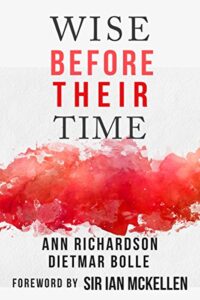
Wise Before Their Time by Ann Richardson

This sentence was taken from a review of my book about people with HIV and AIDS in the 1990s, Wise Before their Time.

Suddenly, the disease no one has talked about for years is everywhere. No, not as a new epidemic, but as the focus of popular culture.

In London, the French film BPM (original title: 120 Beats Per Minute) has opened and can be seen in fifteen different cinemas. It was premiered at the Cannes Film Festival in 2017 and has been showing in numerous other countries for some time. It tells the stories of a set of young men involved with the French version of Act Up in the early 1990s.

It was very highly reviewed and won many awards, including the Grand Prix at Cannes. I saw it yesterday and it was very powerful.

Meanwhile, a week ago, a two-part play called The Inheritance opened at the Young Vic Theatre in London. Directed by Stephen Daldry, it depicts the lives of a set of young American gay men over a period of time, including the AIDS crisis. The Telegraph newspaper gave it 5* and said it was ‘perhaps the most important American play this century’. I have yet to see it.

It happens that I recently read How to Survive a Plague, by David France, although it is not just released. It is, again, about AIDS activists but this time in the United States, and was issued first as a movie (in 2012), and subsequently as a book (2016). It is well worth reading as it chronicles the drama of the period.

And this brings me to my own book, Wise Before their Time, in which over forty people with HIV and AIDS talk about their lives in their own words. First published in 1992, based on interviews at an international conference of people with HIV and AIDS in 1991, it was re-launched last year to great acclaim. Have a look on Amazon, it has received nothing but 5 star reviews.

Ian McKellen wrote a Foreword in which he said “These stories are as powerful as any great classic of fiction”. That’s a good start.

And what do the reviews say? Many stress its importance, as in the title to this post. One reviewer wrote “This book’s intrinsic historical and cultural value is invaluable.”

Many explain the nature of the stories “often moving, even tear-inducing, and also occasionally funny” and “an honest, moving picture which touches a reader’s heart”.

And one urges “Do read this book. If not for anything else then just to understand and appreciate the beauty of being healthy and being alive!”


Share:
Reading time: 2 min
Life in a Hospice, Wise before their time, Writing

Revisiting Books Written Some Years Ago

March 28, 2018 by Ann Richardson No Comments

Have you ever gone back to read books you wrote some years ago?  Most writers, I suspect, don’t. We write, we publish and we move on.

Some writers say that when they do go back, it makes them uncomfortable to see their earlier, less formed self.  They have learned so much in the meantime.

Indeed, some remove their own books from sale, lest readers think this is the best they can do.

Looking back with pleasure

But there is another response. Some of us return to old books to find ourselves surprised at how good they were. We have also learned much in the meantime, yet our earlier self was unexpectedly thoughtful. It is wonderful to discover.

Last year, I returned to two books I had written many years ago, which were trade-published. I was so impressed with both that I re-launched both for new readers, after getting my rights back (much easier than you think).

Ten years ago

cover of Life in a Hospice

The new self-published edition

Ten years ago, I wrote a book offering the thoughts of hospice staff about working in end-of-life care, Life in a Hospice. It had been published by a highly respectable medical publisher and had a Foreword by Tony Benn, a well loved MP. Indeed, it was Highly Commended by the British Medical Association in 2008.

But I was irritated by the lack of publicity by the publisher (taken over by a major conglomerate) and wondered how relevant it would feel today. Yes, what a delight. I was very touched by the stories and it felt fresh as a daisy!  That prompted me to take back the rights and re-publish it as both a paperback and e-book, but added a new cover.

RESULT: I must have been right, because after selling one or two books a year, it has sold nearly three hundred copies since March 2017. That’s not Harry Potter, but it is good for a book on hospice care.

Twenty-five years ago

cover of Wise before their time

Once topical, now of historical value

That experience prompted me to go back to a book I had published in 1992 setting out the personal stories of people with HIV/AIDS when it was a life-threatening disease, Wise Before their Time. It was long out of print, although there were second hand copies available on the net. I approached the task of reading it with some trepidation, as I could well have been embarrassed.

On the contrary, I found myself incredibly moved by my own book, which I had not read for twenty-five years.

Although the stories have no current relevance, as people diagnosed with HIV can now anticipate a normal life span, they had a historical significance.

Again, I took the rights back and republished it as both a paperback and e-book, again with a new cover.

RESULT: It is selling less dramatically, but selling nonetheless. And it has garnered nothing but five star reviews, which is pleasing.

Conclusions

I am not a young woman, so these books – old as they are – were not written in the full flush of youth. Perhaps if I were able to go back to writings from my twenties or thirties, I would well be embarrassed.

But for those of you who have traditional publications long out of print and wonder whether to just forget about them – think again.

Take them out and have a look. You might be pleasantly surprised. And if you are a member of ALLi, you know that self-publishing is easy.  The next step is obvious.


This post was first published by the Alliance of Independent Authors (ALLi)  See https://selfpublishingadvice.org/self-publishing-back-catalogue-hybrid-authors-advice/

Share:
Reading time: 2 min
Other topics

Worrying

March 24, 2018 by Ann Richardson No Comments

Are you a worrier? There are a lot of us about. Perhaps especially as we get older. Personally, I’ve been a worrier all my life. There is so much to worry about!

The State of the World

We can start with the state of the world. There is global warming. Isis. The Middle East. Korea. Politics of all kinds, whatever political persuasion you happen to be.

We worry whether the world we are leaving our grandchildren is as good as the world we inherited. And whether there is something more we should be doing about it.

 Family

Then there is your family. Children are always a source of worry – when they are small, and especially when they are teenagers. Remember that period? At that time, we worried about one thing or another about them from the moment we woke up!

But it doesn’t end even when they’re all grown up. Indeed, if they are married or have a partner, the people to worry about doubles.

Does everyone have the right job? Or, for that matter, the right partner? Is everyone coping all right with day-to-day matters, such as getting that possibly dangerous car fixed? Or are they becoming too obsessed with social media?

People whose adult children have serious problems – such as bringing up a child on their own, a tendency to depression or even moving house – have even more to worry about.

I am told there is an old Chinese proverb that states mothers are as happy as their least happy child. It resonates with me, a lot.

We also worry about our grandchildren. Are they getting enough attention from their parents – or, perhaps, too much? Is their school giving them the education they need? Do they have enough friends? All the worries that you experienced when your children were small emerge all over again.

Yourself

I worry about a lot of things, but I probably worry about my own self the most.

Did I say the right thing to the woman at that party last week? Have I remembered to do that favour for a sick friend that I said I would? Was the person who said they liked my new haircut – or, worse, my latest book – really just being nice?

Not to mention all the silly things we inevitably worry about, such as did we turn off the gas on the stove when we left the house? Or did we leave a window open where a burglar could see it?

Doing Something about it

If you are a worrier, what can you do about it? All my life, people have said to me that I worry too much, that I should relax. I don’t know how other people react to such admonishments, but they mildly annoy me.

First of all, they won’t make any difference. Worrying is part of me. Asking me not to worry is telling me that I should be a different person. At some point, I realised that if worrying is a part of me, I should simply accept it and live with it.

And second, what does worrying too much mean? Yes, if you are making yourself ill with worry or turning to drink, that is one thing. But worrying too much is also a matter of giving due attention to getting things right. It can be a good thing.

Don’t Worry About What You Can’t Control

Fortunately, I have a husband who hardly ever worries. He says there is no point in worrying about something if there is nothing you can do about it. Since this covers most contingencies, he is a very relaxed man.

This was initially published on sixtyandme.com (http://sixtyandme.com/how-to-stop-being-a-worrier-no-matter-what-happens-in-your-life/) and cannot be re-blogged

Share:
Reading time: 3 min
Page 10 of 13« First...«9101112»...Last »

Recent Posts

  • Researching the Female Orgasm
  • Why do Long-Term Couples Seem to Die Close Together?
  • Follow Your Emotions
  • Thinking about the Vulva
  • How Did We Do?
Alliance of Independent Authors

 
© copyright Ann Richardson 2015-
Privacy Policy