Ann Richardson, Author - My Books and Other Matters
  • Home
  • About Me
  • My Books
    • The Granny who Stands on Her Head
    • Wise Before Their Time
    • Life in a Hospice
    • Celebrating Grandmothers
  • My Substack
  • Talks
  • Contact Me
Being older, Other topics

Researching the Female Orgasm

January 1, 2023 by Ann Richardson No Comments

The female orgasm was suddenly in fashion last summer, if the number of newspaper stories was any indication. Like the British say about buses, you wait for ages for one and then three come at once.

Oh dear, that wasn’t meant to be a pun.

So, what were these stories all about?

The Movie

It started in June with a movie, with the unlikely title of Good Luck to You, Leo Grande. This is the story of a 60-ish-year-old woman, widowed for two years or so, who hires a sex worker to learn more about sex.

Her husband had been of the ‘do the business and put your pyjamas on’ variety, and she felt she had missed out. Why was there such a fuss?

Among other things, she tells the sex worker that she had never had an orgasm, but this was not what was worrying her. At least ostensibly.

The movie is not primarily about orgasms or even about sex narrowly defined. Most of it concerns the two protagonists talking. And talking. And, of course, sex happens.

But it is very much about sex in the sense of two people learning about themselves and each other through their mutual interaction and intimacy.

And it is very frank about the female orgasm.

I might add that I thought it was a very good film, conveying the complexity of sexual activity and its importance to our sense of contentment with ourselves.

The Study

About two weeks later, my newspaper of choice (The Times, London) ran an article by its science editor about a study of the female orgasm, being undertaken at the University of Ottawa.

What pleased me was that the study’s population, more than 600 women, were aged 18 to 82. It was great to see some recognition of the continuation of sexual activity into our older years.

The research seemed to be principally concerned with testing the accuracy of two ‘orgasm scales’, used to measure orgasms for their ‘subjective psychological aspects’.

These were, in turn, an ‘orgasm rating scale’ and a ‘bodily sensations of orgasm’ scale. The women were asked about their experiences to see how these tallied with existing understanding.

Among other findings, the study noted that the female orgasm, as shown on the large screen, is not the norm at all.

We do not necessarily moan or scream in When Harry Met Sally style. Such ‘copulatory vocalisations’ (wonderful phrase) were voluntary and did not correlate with female pleasure.

Who would have known? Who discusses these things with anyone? My close friends would know I am acquainted with sexual pleasure (and vice versa), but we have never explored the details.

New Nomenclature

And just when I thought the topic must surely be covered for some time, yet another study was reported, this time in August, from Charles University in Prague.

Using a blue-tooth vibrator (the mind boggles) to examine the internal reactions of 54 women, age unspecified, during orgasm, they found that the actions of the pelvic floor muscles varied considerably from one woman to another.

As scientists love to catalogue and name, these researchers came up with three different types of orgasm: the avalanche, the wave and the volcano. Each label corresponded with particular muscle fluctuation patterns at the time of orgasm.

It certainly makes you think.

The research is on-going.

So How Does This Help You or Me?

I don’t know about you, but I haven’t a clue how all this research helps the ordinary woman in the course of her day-to-day life.

Perhaps women who are in the habit of faking it will change their ‘copulatory vocalisations’, although this raises issues of what their menfolk have been led to expect. You do need a certain concurrence about expectations here.

Perhaps women with no experience of orgasm will learn how to manage, or indeed recognise, their orgasmic contractions more clearly. Yet this seems odd to me as such contractions are clearly involuntary (not in the sense of not wanted, but in the sense of not being within a woman’s control).

But I still have problems. As far as I am concerned, all these visible (or audible) manifestations of orgasm rather miss the point.

It is not the exact description of what any person’s body does that is most important, but the overall sensation of pleasure, intimacy and bonding associated with orgasm.

Not to mention the longer-term impact of the whole event on overall well-being.

In my view, the world is washed clean after sexual climax and your sense of being at peace is profound. Can anyone measure this?

Sex and the Older Woman

And if anyone reading is wondering what this discussion has to do with your eighty-year-old writer, let me assure you that sexuality continues right on up the age scale, if you want it to.

Some people say that sex changes with age, but I do not recognise that view. Nor do various friends I have asked. And we are in our 80s.

There may be less swinging from chandeliers – if that was ever part of your repertoire; it never appealed to me – but sexual feelings and experiences have not changed for me.

And for the very skeptical, do read my article about my father, who started a new sexual relationship at the age of 90, which is in my book, The Granny Who Stands on her Head.


A version of this article was first published on SixtyandMe.com

Share:
Reading time: 4 min
Facing death, Life in a Hospice

Why do Long-Term Couples Seem to Die Close Together?

January 1, 2023 by Ann Richardson No Comments

Some people avoid any discussion of death and dying, but I have always found the subject fascinating.

You are here one minute and gone the next. Very strange. And much harder for all those around you than it is for you, yourself. They are the ones who must cope with the strangeness of it all.

I was so fascinated with death and dying that I carried out a series of interviews about what it is like to work in end-of-life care. Put together, these ended up comprising a highly successful book.

It chronicles the experiences and views of a wide range of people who work with the dying, especially nurses, but many others including doctors, managers, therapists and a very reflective cook.

The Timing of Death

There are many issues that fascinate me, but one is the extent to which a dying person can control when he or she dies.

I had heard rumours before my research, but it confirmed that some people tend to wait for a particular event and can hold on surprisingly long when it is important.

And some others wait for the moment when their loved one is out of the room, presumably to avoid their distress, before letting go.

Long-Term Couples

But there is yet another intriguing discussion to be had on this subject. This is the apparent fact that long married couples can often die in close proximity to one another, within three months or less. Sometimes even weeks or days.

This is often commented on. My parents certainly did, dying aged 90 and 91 within three months of each other. I went from having a full set of parents to being an orphan, admittedly not a young one, as I was in my late 50s.

A good friend did the same thing not long ago. She was in her late 80s, her beloved husband of nearly 65 years had died, and she just lost all interest in living. She died quite soon afterwards.

You will perhaps know similar cases.

There are some very touching stories of married people dying within days – or even hours ­– of each other. People tend to find them heart-warming, reinforcing our romantic ideas about the power of love.

Is this all just a coincidence or is there an explanation for such patterns?

Research on Couples

Those who have researched this subject seem to think that there is a genuine phenomenon, termed the ‘widowhood effect’, so it is more than a coincidence. It is particularly common among men, i.e., widowers rather than widows.

It is also known as ‘dying of a broken heart’.

It is thought that the lives of bereaved spouses are upset so radically by the death of their partner that they are vulnerable to both physical and mental health issues.

Women are often more resilient, in part because they tend to have built up more close friends around them.

Women are also more likely to eat better, but both men and women tend to pay less attention to their food, because of loss of appetite and lack of companionship when eating.

None of which explains the rapid dying, since neither mental health problems nor poor diet lead directly to immediate death.

Anyone who wants to read further on this issue will find a reasonable summary of recent research here.

What Is Our ‘Take-Away?

Everyone wants to learn these days. If there is something important going on, they want to know the ‘take-away’.

This one seems a bit complicated.

Looking to your own life, you may want to ensure that your spouse has people who will provide company (and decent food) if you know you have a short life expectancy.

You may also want to be conscious of potential problems for yourself if your spouse dies first. As we get older, we do tend to think about these things a bit more.

Perhaps you know someone who has lost a spouse and could help them in this regard. You may want to gently offer some help, difficult as this can be.

But those working with grieving spouses will already appreciate the need for some companionship and good nutrition – they should be high up on their agenda.

Perhaps you can do more than be alert to the issue.


A version of this article was first published by SixtyandMe.com

Share:
Reading time: 3 min
Other topics

Follow Your Emotions

January 1, 2023 by Ann Richardson No Comments

We make decisions all our lives and, indeed, every day. Most of these are straight-forward and don’t require a lot of thought. What shall I have for lunch? Shall I read a book or watch the TV this evening? Should I phone up my daughter for a chat?
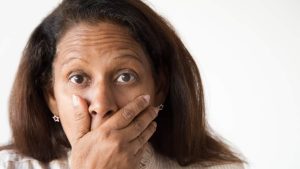
Yes, you may need to think for a small moment, but these decisions are not a matter of any agony. Whichever way you decide.

Larger Issues

But from time to time we are faced with much larger problems. We can procrastinate for a period, but eventually we need to decide. Such decisions tend to be ones that will affect our future lives in some substantial way.

They may be about housing. Should I downsize? If so, where should I go? What kind of commitment do I want to take on? Do I want a garden? And so forth.

Or they may be about life plans. Should I continue to work? If so, should it be full-time or part-time? Would I be happier volunteering a few days a week? If so, what kind of activity would I wish to engage in?

Or they may be about personal relationships. Should I try to mend fences with my oldest friend after a bad argument? Should I try to spend more time with my granddaughter, although it is very inconvenient to do so, as she lives a long way away?

And so forth. All very tricky.

What are the key considerations that will help us decide?

The Obvious Choices

Sometimes, the answer is clear and staring us in the face. Here is one scenario that I just invented.

You are thinking of moving to the granny annexe that your son and daughter-in-law have built with your needs in mind. You need help with a new disability, they want to look after you, and you are a very close family in any case. And you adore your grandson.

The decision is very straight-forward. A problem happily solved.

The Difficult Choices

But it isn’t always – perhaps not even usually – like that.

Often, there is some path that your head tells you is the right thing to do, but your heart feels it is wrong. For instance, let me amend the above scenario slightly.

You know that you need help, and you know your son and daughter-in-law want to look after you, but deep down, you don’t like their ways all that much. You don’t want to be thrust into their company on a daily basis. And your grandson is not being brought up in the way you like, so that he is not pleasant to be around.

It looks like you ought to accept their help, but you suspect that the move may result in a lot of arguments and aggravation.

What do you do?

Go with Your Emotions

I have never been one to tell friends or family how to lead their lives, because I feel such decisions are very personal and individual. I might help by asking a lot of pertinent questions, enabling them to clarify the issues.

But it would be very rare for me to advise them which way to fall.

I do often say, in the words of my husband who has said this for years, “Go with your emotions.” This is another way of saying “follow your heart.”

If you think about it long enough, you will find that most difficult decisions involve a conflict between what you think you ought to do and what you, deep down, want to do.

There is the sensible course, which everyone outside your orbit, would say “yes, of course, do that.”

And there is the course your heart tells you is right.

I say go with your heart every time.

Not Straight-Forward

But every case is different. It is rarely straight-forward.

You may be single and in your mid-60s and due for retirement. You are in good health, and everyone says, “Get out a bit, travel, see the world.” This sounds like sensible advice, but actually you love your work and enjoy the company of your colleagues and have no interest in travel.

Or perhaps it is the other way around. Everyone might say, “Times are hard, you should keep earning money while you’re able; don’t retire!” and this seems like the sensible course. But deep down, you are bored with your work and want to get out to see the world while you can.

Same scenario, different emotions. Only you can know which one is right.

And by all means, talk it over with someone who can ask the right questions. This can really help you to clarify where you want to be. Let it buzz around your head for a while.

Follow Your Heart

But do try to follow your heart.

It may not be easy. You may have to step on some people’s toes. It may cost you more money or mean that you have little money left over for anything else.

But every time that I have ever followed my head, I have realised afterwards it was the wrong thing to do. And when I have followed my heart, things have worked out, and I have felt at peace.

And peace of mind is worth everything.

Good luck.

A version of this article was first published on SixtyandMe.com

Share:
Reading time: 4 min
Other topics

Thinking about the Vulva

December 13, 2022 by Ann Richardson No Comments

Two little girls, age 2 and 4, are having a bath. Their mother, a doctor, is asking them to wash themselves. “Who is going to wash her face?” she asks. “Me,” “Me”, they shout at once, giggling.

There is a bit of splashing, Then the mother continues, “And who is going to wash her vulva?” “Me,” “Me,” they again shout at once, again giggling.

Did your eyebrows go up? Mine did. And then they went down again. I think she was right.

It takes a bit of thinking about.

And where did I hear this exchange? On BBC Radio 4, on a series of programmes entitled “Inside Health,” with this section brazenly called “The vulva,” played on a Wednesday afternoon.

Body Part Names for Men

We grow up and are told various names for the lower end of our bodies.

Words for the male body are easy, perhaps because they are readily visible. You can use the formal words – penis and testicles – and many people do.

You might not talk about these things at the Queen’s Garden Party, but otherwise they are considered reasonable words with no overtones of impropriety.

There is also a friendly child’s term for the penis in England – and perhaps other parts of the world – the ‘willy’. It has an endearing quality and is not considered impolite, except in the most formal circumstances. Some men use it, too, but rarely in a sexual context.

And, of course, there are a lot of slang words for both, which you don’t learn at school and we don’t need to worry about here.

Body Part Names for Women

But for us women, it is much more complicated. There have always been issues around what we call our various body parts in the lower region.

And much more of a frisson when we say them out loud.

Somewhere along the line, we learn we have a vagina, often contrasted to the penis, and it is also seen as a respectable term.

And at school, we tend to be shown pictures of the inside reproductive parts, so we know about the ovaries, the fallopian tubes and the uterus (or womb) – and even the vagina in this context.

But what about the rest of our equipment? Who teaches us that we have a vulva or a mons pubis or labia majora and minora (which sound like some distant part of Turkey).

No one teaches us, we cannot see them and we remain remarkably ignorant. Indeed, we often know the names for the more detailed parts of our eyes better than we do of our female parts.

And then there are the inevitable euphemisms. My mother told me I had a ‘front bottom’ and a ‘back bottom’ and left it at that. I never learned anything more in that department from her.

When I had my daughter in 1969, the nurses informed me that I had a ‘front passage’, a ‘back passage’ and a ‘birth canal’. I had a slight jolt, but I worked it all out.

(If I may digress, I also learned that babies ‘passed motions’, but at the same time – remember it was a period of student protests – the students at my husband’s university were busy ‘making motions’. Or it may have been the other way around. The two concepts have been forever mixed up in my head since that time.)

Again, I am not getting into the business of slang. You could write a book about that.

The Power of Words

So why are we shocked when a mother teaches her young children to use the correct word for that part between the legs?

You just don’t hear the word very often and it sounds, well, too strong, too technical or perhaps too much ‘off colour’.

Is the word ‘vulva’ seen as vulgar because it starts with the same three letters? What if, instead, we associated it with a Swedish car? It already sounds a lot more friendly.

But you may say, it is not ‘nice’ because it is associated with sex. But so is the penis and it does not have the same power said out loud.

There is certainly nothing shameful about the vulva – or, indeed, any part of the body. The vulva and the associated bits and pieces are simply parts of the female anatomy. Every female has them, from the new-born baby to the 90-year-old woman and beyond.

On reflection, it can only be right for mothers to teach their children the right words and to not be embarrassed by any part of their body. This goes for boys as well as girls, so we all know all the anatomical terms.

And, I might add, that is only when writing this article that I learned that the vulva includes all the ‘bits and pieces’, including the clitoris, – I had always thought it was just the part you could see from the outside.

Never too late to learn.


A version of this article was first published by SixtyandMe.com


Share:
Reading time: 4 min
Reviews of my books

How Did We Do?

December 13, 2022 by Ann Richardson No Comments

“How did we do?”

How often do you see this question in your email box?

In the last week, I have received emails from my optician and from a delivery service asking me to review their performance as deliverers of a service.

Not to mention from an online company that sells health related products asking for my views about the product I had bought.

It makes me want to scream!

Being Asked Our Views

It seems to be all the rage to use the convenience of email to ask our opinion on all sorts of goods and services. Occasionally, there is a small inducement, such as the chance (one in a million?) to win some valuable prize, but usually there is nothing.

You are asked to give a number of stars out of five. And, before you know it, you are asked why you gave this assessment. It all takes time with no payoff to yourself.

And it is very irritating. You had needed to buy something, and you went to a bit of trouble to decide what to buy and where. You made your decision, and it has come. Surely, this is the end of the matter.

As a former researcher (although not of this kind), I have tended to feel it is my duty to respond if asked. And I used to do so faithfully.

But it is becoming much too frequent. My patience is being tried. The simple solution, of course, is to delete the email. Problem solved.

Until the next one.

Book Reviews

But there is a different problem.

I write books. And we authors need good reviews in order to sell our books. Lots of reviews, the more the better. Otherwise, no one will be willing to buy.

Some well-known writers get every new book reviewed, often in prominent places. They are lucky, but they are a minority. Most of us struggle to get reviews whether from someone famous (or a fellow writer) or simply ordinary readers.

The more successful writers and their publishers use all sorts of means to engender reviews, most of which cost considerable sums of money. The rest of us simply ask at the back of a book for readers to put a review somewhere that it will be seen, such as on Amazon.

We don’t like doing it, but every bit helps. We hope that it doesn’t annoy readers too much.

And, to be fair, we are not large companies seeking to improve our market status by declaring that x percent of our users found us wonderful.

We are simply individuals, who have spent large amounts of time and effort to create a book, which may – in the absence of any review – end up languishing unread.

Each review makes a difference to the potential reader wondering what to buy next.

And equally importantly, it provides the most wonderful boost to the writer him or herself. We all know our best reviews off by heart.

Some years ago, Sir Ian McKellen said of one of my books, “As powerful as any great classic of fiction.” My heart swelled.

Much more recently, my latest book has received numerous positive comments, “a lovely, lovely book”, “original and perceptive”, “extremely well written.” My favourite came from a fellow writer who I do not know: “I loved your book”, she said, “Never stop writing.”

So, next time you read a book and like it, do think about it. A good review will really help to sell it to more people.

And it may just make the writer’s day.


This article was first published by SixtyandMe.com

Share:
Reading time: 3 min
Other topics

Travel time

December 13, 2022 by Ann Richardson No Comments

I was chatting to one of my grandsons, aged 12. He has just started at a new secondary school, which ­– in contrast to two previous schools he attended ­– is roughly five minutes’ walk from his house.

After asking about his new friends, new teachers and what he is learning, I commented, “And isn’t it nice that it is so close! For once, you don’t have a long trip to get there.”

“Well, yes,” he answered immediately and then stopped. “But I did really like the long walk to the bus for my last school – both going out and coming back. It was a nice time to think. I miss it sometimes.”

That was a surprise. To actually value the time it takes to travel from one place to another.

And then I thought, yes, he is on to something.

What’s special about travel time?

Travel time is that wonderful time when you have no obligations except to continue on your way. It is ‘me’ time in the best sense of the word.

At its worst, of course, it is terrible. There is the regular commute ­– that dreaded routine of getting into the car and down to the station or catching the bus and then the train. At rush hour – too many people, often no chance to sit down.

In fact, we did whatever we could to avoid the emptiness of that time by filling it with something useful. Audiotapes in the car, books and newspapers on the train. Anything to help us to get through to the next stage of our lives.

No one can miss that.

Yet at its best, travel time is a bit of space to think your thoughts, smile quietly about some memory or simply empty your mind. Time when you don’t have to present yourself to others as you want to be seen. Time when you don’t have to respond to others in any way. Time simply to be yourself.

Travel time also gives you a short break between what you do here and what you do there. From being the child at breakfast to being the pupil at school. From being the mother in the house to being the busy nurse at the hospital. And so forth.

These are not small changes in your persona. The travel time gives you the chance to adjust yourself, to prepare for the oncoming role.

But We All Have Plenty of Alone Time

Ah, you say, but surely, we all have plenty of time to ourselves. We don’t have to be on our way somewhere in order to enjoy being on our own.

Well, yes and no. For many of us, our home is full of other people – whether siblings or partners or extended family or all sorts of other people who come and go. These people tend to intrude on us in one way or another, sometimes good, sometimes less so.

It is very hard to forget they are there.

If you go out of the room, you are likely to be pressed to do something. As a child, to get on with your homework or piano practice or even come chat when you are not necessarily in the mood. As an adult, to make the lunch or fix something or, again, to chat when you are not necessarily in the mood.

Or it may well be something pleasurable: “Come see this interesting programme on the TV,” “Come taste this pudding I am making for dinner.”

Nonetheless, it intrudes on those quiet inner moments.

True Alone Time

And even when we find ourselves completely alone, we are pulled in many different directions. For those with an inbuilt sense of duty, there is the correspondence to be answered or the bills to be paid or even the plants to be watered.

For those who are easily swayed by the things they enjoy, there is that programme taped from last night’s TV, that book you are enjoying or even a simple lie-down on that very comfortable looking bed.

Always diversions in another direction.

This is even more so if you work from home, as I did for many years before it became fashionable, because I was self-employed. When people discussed how they got to work, I always said I went to work by the stairs.

And go to work I did. Sat down at my desk and got on with things until I was too tired to continue. No time to stare at the walk and think.

In principle, I could have done what I wanted with my time, but I inherently felt that work came first.

Back to Travel Time

Which brings me back to travel time. For those of us who like to reflect, it can be the perfect time to do so. Whether walking a distance, driving or sitting on a bus or train, we are – in our minds – on our own, away, far away.

Sometimes, that is a nice place to be.

Share:
Reading time: 4 min
Celebrating Grandmothers, Grandmothers

Teenage Grandchildren

December 13, 2022 by Ann Richardson No Comments

It all starts with a baby. A sweet helpless and very loved bundle of not-yet-known-but-absolutely-expected joy. You held that baby and felt the excitement of a new human presence in your life. A grandchild!

Perhaps this feels not that long ago.

And then that baby began to develop. He or she began to crawl and then stand up and toddle (if that is the word for what a toddler does).

And talk. And become a person with a personality, interests, a strength of will – and all the time bringing even more love into your life.

That adorable child grew some more, and, with luck, you had a lot of fun in the park or just talking and teaching him or her all sorts of things about the world.

It was delightful. You re-lived the pleasures of having small children in the house. Each week – or even each day – you heard about what they were doing, their ups and downs, their development.

I found this stage so interesting that I wrote a whole book about it.

Well, you know the rest.

There was more growing – and before you could say “sweet-sixteen-and-never-been-kissed,” you found yourself with a teenager.

Perhaps more than one.

The Teenage Years

Teenagers can be adorable. They can be easy-going, cooperative, easy to please and always polite.

But they aren’t usually any of these things.

It happens slowly. You first learn about the problems from one of their parents ­– your son or daughter.

They tell you about the grumpiness, the talking back, the contrariness, the confusions. Ah yes, you think, I remember it well. Only the last time, it was your own child, perhaps the very person telling you about it all. Or a sibling.

You are much more sympathetic now. You reassure them that it is just a stage – an annoying one, of course, but it won’t last.

And then the grandchild in question visits you. That eager nine- or 10-year-old is suddenly taller than you, scruffily dressed and altogether awkward.

If it is a boy, there are signs of a growing moustache. If it is a girl, there is probably some make-up.

It feels like another person altogether, albeit with some familiarity. You know this person, but you don’t know him or her so well. There are definitely changes.

You need to find new ways of relating to them.

The Good News

Well, you may remember dealing with teenage offspring with less than positive thoughts, but in fact it is entirely different with grandchildren.

Their need to expand, to argue, to find themselves through a constant contrariness does not extend to you. These attitudes are primarily directed to their parents – and sometimes their teachers.

You are the good guy, the port in the storm – and they have no wish to lose your favour. They come to you to display their new achievements with pride, while being cossetted at the same time.

In other words, your home is the place to relax from all the pressures elsewhere.

And, therefore, relating to them is not so hard at all. You may not like their hair. Or the nose stud or worse.

Or the sloppy way of talking – perhaps too quiet, perhaps too loud. Or the words you don’t have a clue what they mean.

But if you can overlook these matters as a temporary aberration, you will find the same loving children underneath. They may even become more polite to you.

And Even Better News

And unless you are very unlucky, you may see the growing signs of the adults they are to become. Their personalities are becoming clearer, emerging from the slightly blurry images from their childhood into much more delineated pictures.

Such personalities may be of any type, of course. Perhaps he or she is funny. Perhaps they are athletic. Or musical. Or academic. Or withdrawn, which is always difficult.

They may be becoming interested in some issues, and you can talk about them. Perhaps they like movies and you can talk about that. Or politics. Or something else altogether.

It can be really interesting to see these different personalities and interests at their formative stage. You may even be able to help them somehow.

Perhaps he likes to cook – you could show him a new recipe. Or she likes to sew – you can show her a new stitch. Or they have some fascination or other. You might know someone who could talk to them about it.

That is the beginning of a long-term friendship with a growing adult. And it is that adult that they have been building up to all the time.

A real pleasure.


This article was first published by SixtyandMe.com

Share:
Reading time: 3 min
Being older, The Granny Who Stands on Her Head

A rose by any other name

June 22, 2022 by Ann Richardson No Comments

I was recently talking to some friends about the fact that I was writing , which I have just published. I may have used the word “old.” One woman immediately alerted me to be careful never to use the word “old” – “We are ‘older’ – not old,” she insisted.
This got me thinking. Everyone tiptoes around the problem of what to call older (or old) people, as if it were a kind of embarrassing condition to which we must not call too much attention.

Pensioners

Oh dear. Such a problem.

Old people in the UK were for many years referred to as old age pensioners (often shortened to pensioners or OAPs). Any woman over 60 (or man over 65) was deemed to be an OAP, correctly as they would be drawing a state pension. The qualifying ages have changed more recently.

Although the phrase was used descriptively, it immediately conjured up someone slightly bent over and possibly leaning on a cane, like those road signs to warn drivers to be careful of old people in the area.

Pensioners were assumed to be poor, to be living quiet lives and not likely to live very long. I’m not sure when it happened, but this term seems to have gone out of style.

Seniors and boomers

In the meantime, the word senior citizen or seniors became very popular in the US and has been growing in Britain.  Aside from the confusion with those in their last year of high school or college, both of whom were known as seniors in my day, this always had the unpleasant whiff of a euphemism to me.  Who, after all, would want to be called a junior? And this is only the reverse.

As my particular generation has aged, older people are sometimes referred to as baby boomers in a descriptive way. This at least has a more active image. The difficulty for me is the incidental association with the word ‘baby’, a patronising epithet for women that has always been deeply offensive to me. Sometimes this is shortened to boomers, often seen as pejorative.

And some words are used for more formal occasions, such as person of advanced years usually in an effort not to sound condescending. The more medical term geriatric and the somewhat jokey term oldster pop up from time to time.

Just occasionally, a word can actually seem respectful of older people. Derived initially from discussions about older people in other societies, the word elder came into fashion, with a mild overtone of wisdom. This is not really used much in ordinary parlance.

Sticks and stones

We all know that there are numerous words that imply an older person, particularly a woman, is decrepit, no longer able to think and, frankly, plain.

There is old crone, followed by old hag, old bag, old biddy and old crock. Not to mention old dear. Even superannuated, although ostensibly more respectful, is not something anyone would aspire to be.

When it comes to politics, the term blue rinse brigade suggests a more conservative (and possibly Conservative) bent. For those who don’t know, it used to be common for older women to rinse their grey hair with a blue dye, giving it a blue-ish tinge.

And then there are the more direct insults. My son, in his teens, referred to older people as crumblies or wrinklies. These, at least, added a bit of humour.

And finally, I can’t omit my favourite. A friend tells me that years ago, the French referred to vielles femmes (old ladies), très vielles femmes (very old ladies) and son et lumières – the latter being the sound and light show often played onto ancient castles or monuments in rural France.

I can just visualise the kind of old lady that might be compared to an ancient monument, but it certainly isn’t me.

I have tried to track this down to more recent usage, but alas, none of my French friends could help here.

Personally, I take it all with a bit of a laugh – we are who we are, and we would smell as sweet by any other name.


A version of this article is published in my book, The Granny Who Stands on her Head: Reflections on growing older, Glenmore Press.  Available on Amazon and elsewhere.

Share:
Reading time: 3 min
Celebrating Grandmothers, Grandmothers

Getting on with the other grandparents

June 22, 2022 by Ann Richardson No Comments

You have just become a grandmother – or perhaps you have been one for a long time. It is so very exciting to have a new baby in your life. Not to mention all the other stages, from toddlers right on up.

But one thing you will have noticed is that the arrival of grandchildren affects your relationships with a wide range of other people.

Your relations with own your son or daughter may well deepen or, in a few cases, deteriorate. A new child inevitably brings new shared joys but can sometimes bring out old tensions.  Your relations with your son- or daughter-in-law will also change. They come as part of the package of enjoying that new child, especially if it is a daughter-in-law who had the baby. You may have found that you need to tread carefully not to be seen as ‘interfering’.

But most surprisingly, there are yet another set of relationships that may become a more visible part of your life – with the other set of grandparents.

The other parents

In my experience, the people our children choose to marry can come from any sort of family. They can be our own friends or neighbours, of course, but they very rarely are. As often as not, they are completely different in at least one way, if not many. Increasingly, they may be of a different nationality or religion or class. Or, indeed, political leanings.

They may be very upright when you are more of an ex-hippy or the other way around. They may be born-again Christians, when you have never held any religious beliefs. Or they may be obsessed with cruises to distant parts when you would not dream of going on one or, for that matter, could not afford it. And on and on.

Perhaps they are absolutely lovely people, and you are all pleased that your children introduced you to each other.

You just never know.

Meeting up

You probably met the other parents first at the wedding, if not shortly before. And you may have had no reason to see them again. Or you may meet often for family occasions.  You may feel, in the interests of general friendliness, it is valuable to establish good relations early on. This may or may not be reciprocated.

My mother, a very intellectual American woman, decided it would be a good idea for her and my father to meet my new husband’s mother (and her current man) when visiting London. His mother was working class, a heavy drinker and easily intimidated by people she didn’t know.

This could not have been a combination made in heaven. I wasn’t there, but I hate to think what a long evening that was from everyone’s point of view.

Fellow grandparents

And then your respective children become parents – and suddenly you have an interest in common – the grandchildren.  This can make for some interesting, difficult or, if lucky, happy situations.

Some time ago, I wrote a book based on deep interviews with grandparents, and I found all sorts of different experiences.

At best, the respective grandparents liked each other and went to some joint trouble to make their children’s lives easier. They coordinated their schedules, for instance, to share out needed childcare. One set of prospective grandparents even met the other at the airport when the latter were coming in for the birth. Grandparents also cooperated when there was a specific need, such as when one young couple, suffering marital difficulties, needed time to talk together without the children.

On the other hand, there could also be serious tensions. Sometimes, there was an unspoken competition between the two sets of grandparents to see who could do most for the grandchildren. Or to become closer to them. Major disagreements over upbringing were also noted. One set of grandparents could be excessively religious – or not religious enough. Or too strict in their care.

Or other matters could arise. One grandmother, for instance, who put a high premium on good nutrition at all times, was very distressed that the other handed out too many sweet drinks and candies.

Sending out ripples

It is surprising how many steps that we take in life send out ripples way beyond those expected. This is an excellent example. You have a child, he or she grew up and fell in love, they produced a child – and suddenly you are involved with all sorts of new people and in new ways.

It can be a real bonus or a pain in the neck!


This article was first published on SixtyandMe.com

Share:
Reading time: 3 min
Facing death, Life in a Hospice

Determining the moment of your own death

June 22, 2022 by Ann Richardson No Comments

I write frequently for an online women’s magazine called Sixty and Me. It  is a wonderful place for older women to learn how to look better, feel better, be a better person and get more out of life. But this article does none of these things.
Yet it is on a subject that I find so interesting, I want to share it with you. It is about some evidence that people who are seriously ill can – in some unclear way – determine the timing of their death.

The nature of the evidence

When carrying out long and deep interviews, it sometimes happens that the people being interviewed raise issues that were never part of the initial research.This is what happened when I undertook a series of interviews with nurses, doctors and others who worked in hospice care for a book on the subject. My principal interest was in their motivations for such work and its impact on their lives.

But in the course of such discussions, many referred to particular patients who they remembered well – and issues arising from their interaction. And one of these issues was this matter of the timing of deaths. All of the patients involved were necessarily gravely ill and in the process of dying, as that is why they were receiving hospice care.

Timing over a matter of days or weeks

The first phenomenon here was the ability of some patients to hold off dying until some particular event of importance to them had come to pass.

One nurse mentioned that a very ill man was expecting his family to come from Australia to see him in England. To her surprise, he managed to stay alive until their arrival and then, soon after, died. But there were others who were keen to see a granddaughter married or a new grandchild born, who also managed to stay alive until the event. There were said to be more deaths following certain holidays, such as Christmas.

No one interviewed had an explanation for these events, but they were stated as facts – and happened too often to be taken as mere coincidence.

Since undertaking this research, I noted that there has been some discussion of the timing of deaths in the course of a year. It seems that there are notably more deaths at the beginning of a new year than in the last days of the previous year, suggesting that dying people ‘hold on’ to see the new year arrive. Indeed, there was particular evidence of this at the turning of the Millennium. Evidently, there were strikingly more deaths in the first week of 2000 than in the last week of 1999, as reported in the Guardian Newspaper (17 January 2000). The Associate Director of the National Council on Aging, commenting on the noted ability of seriously ill people to hang on until a significant event, said “The mechanisms are something of a mystery but the phenomenon is very real.”

Timing over a matter of days

But hospice staff also noted that some people seemed to find the right moment to die. Several cited examples where patients died at just that moment when certain circumstances changed. A number seemed to want to die alone.

A large family, for example, had been spending a lot of time with their dying relative over a period of days. But at one point, one of the visitors needed to deal with their car and the entire family went to the car park for a few minutes. Strangely, this was the time when the patient suddenly died.  Another nurse told of a wife who asked her very anxious husband to go make her a cup of tea. At the time, she was not drinking or eating, but the husband, wanting to please her, went on that errand. Before he could come back, she had died.

It was thought that patients wanted to make their passing easier for their relatives.

We shall never know.

Lessons 

And what can we learn from these stories?

It is possible that they are all coincidences and one shouldn’t make too much of the issue.

But it is also possible that our internal make-up is much more complicated than we tend to think. Links between mind and body are little understood.

I happen to find it fascinating


This article was first published by SixtyandMe.com

Share:
Reading time: 3 min
Page 1 of 131234»10...Last »

Recent Posts

  • Researching the Female Orgasm
  • Why do Long-Term Couples Seem to Die Close Together?
  • Follow Your Emotions
  • Thinking about the Vulva
  • How Did We Do?
Alliance of Independent Authors

 
© copyright Ann Richardson 2015-
Privacy Policy