Ann Richardson, Author - My Books and Other Matters
  • Home
  • About Me
  • My Books
    • The Granny who Stands on Her Head
    • Wise Before Their Time
    • Life in a Hospice
    • Celebrating Grandmothers
  • My Substack
  • Talks
  • Contact Me
Wise before their time

“Powerful Stuff”

November 1, 2018 by Ann Richardson No Comments

Wise Before Their Time by Ann Richardson

Wise Before their Time had a lovely new review this week, entitled ‘Powerful stuff’.

The reviewer says:

An evocative tribute to the experiences of people with HIV and AIDS in the 1980s; to their suffering and to their strength of spirit. A collection of historical value and a reminder of the cruelty inherent to ill-informed, fear-driven prejudice that is just as relevant today.

Read this book. Listen to the stories of the people who contributed to it. Feel their experiences. Find the opportunity to learn from their wisdom in the way you live your life and the ways in which you relate to others.

I like this review because it says something I felt when I wrote this book.  Yes, one should read it to hear how difficult it was for people living with HIV/AIDS back in the day.  But, perhaps more importantly, we can learn from them to make our own lives better.

I say ‘amen’ to that.


Wise Before their Time is available as a paperback and e-book on Amazon and other platforms

Share:
Reading time: 1 min
Uncategorized

Celebrating Grandmothers Gets a New Cover

November 1, 2018 by Ann Richardson No Comments

Celebrating Grandmothers by Ann Richardson

I first published Celebrating Grandmothers, in which nearly thirty women talk about how it feels to be a grandmother, four years ago.

It was very well reviewed and bought both by grandmothers and for grandmothers. It was discovered to be an answer to that question ‘What in the world will I get my mother for Christmas this year?’.

The old cover wasn’t bad, in my view.  I could show the book to people in the street, their eyes would light up and, not infrequently, they would buy.  But I never felt really happy with it.  There was something ‘old lady-ish’ about it.

So I went to my cover designed and she prepared a new cover, as shown above.  The photo is the same, with the warm interaction between grandmother and baby, but the feeling is lighter.  It is available from Amazon.  The contents of the book remain unchanged.

I will be curious to see if there is any change in my sales. Do let me know what you think.


Celebrating Grandmothers is available as a paperback and e-book on Amazon and other platforms

Share:
Reading time: 1 min
Other topics

Are You Old?

November 1, 2018 by Ann Richardson No Comments

Are You Old?

A group of older women are talking. One, age 64, suggests she is beginning to feel old. Her friend, age 68, says, “No, not me – I’m not old, I’m even working part-time.” Their friend, age 75, says, “No, me neither. I feel full of energy.” What is going on? If they aren’t old, who is?

The Image of Being Old

The question is – what is this ‘old’ that they don’t feel? Rather than age itself, what they’re talking about has to do with an image they cannot – or will not – identify with.

I suspect the image is connected to our view of our grandmothers (or other older women we knew) who fully expected to be called old. They wore sensible shoes and ‘appropriate’ clothes.

They mended socks and cooked everything from scratch. They stayed at home or went out with friends to do something sedentary, like playing bingo or bridge. They would never dream of an exercise class.

Unless they were poor, most had never worked. If they had, they would have retired years before. Indeed, they had no expectation of living very long, as life expectancy was so much lower than now, topping at 70 or 71. They were at the last stage of their lives.

They seemed old to us, but perhaps more importantly, they felt old to themselves.

Age Is Just a Number

Our generation is completely different. We play tennis, have sex and wear the same sort of clothes we have always worn. Of course, we don’t feel old. We say, “you are as old as you feel” or “age is just a number” and pride ourselves on how well we keep ourselves trim.

But is this because we fear being old? As is constantly noted, we live in a youth culture and everyone wants to feel they are still part of it. We can dye our hair, have facelifts and hide our advancing years reasonably well.

We are, to all intents and purposes, not ‘old’ to the outside eye. And so, it is easy for us to declare ourselves to be far from old.

Those Who Feel Old

I rush to note that some of us do feel old. We suffer from ill health, have witnessed many deaths, perhaps nursed an ill husband. We are no longer able to do the things we used to do. We accept the situation and readily say we feel no longer young – or even middle aged.

Society Marks Our Age

And we are, of course, aware that our society marks our age in numerous ways. We are referred to as ‘seniors’ or ‘pensioners’ and receive all sorts of preferential treatment.

In London, I have a permanent ticket called a ‘Freedom Pass’. It gives me completely free transport on the tube, bus and train, within a generous perimeter.

I also have free prescriptions and eye tests that other people pay for, although health care is generally free. Not to mention reduced rates at the gym or the cinema. Other countries often offer similar benefits to those over a certain age.

There are, however, the less desirable marks of age. We may be called ‘geriatric’, ‘antiquated’ or ‘over the hill’. My son used to refer to old people as ‘crumblies’, but there are many more such terms.

What Happened to ‘Wisdom’?

But, in truth, what is wrong with being old? Why do we feel diminished by the very thought of being put into this category? If we have passed retirement age, we are chronologically not exactly young. Why not come out and say so?

There are so many real benefits to being old. We have loads of experience with all sorts of people and situations. We have had to face – and come through – crises of one kind or another.

And, most of all, we have the strengthened confidence that comes with this experience. Some would say we have wisdom.

My father used to work for an international organisation which brought him into contact with many people from the Far East where age is valued greatly.

He often struggled to gain authority in their eyes because he always looked young for his age. He told me that he used to mention, as casually as he could, his children being in college – or beyond – to gain the necessary gravitas.

I have personally never had a problem with revealing my age. I am lucky in my genes and do not really look my age and certainly do not dress for it.

As I write, because it is hot, I am wearing shorts and a t-shirt and am, moreover, barefoot. Both my grandmothers would be appalled. Nonetheless, I get offered seats quite regularly on the bus, which suggests I have reached a certain look.

But I will proclaim my actual age – 76 – to anyone who is interested. I do not feel that it diminishes me. Indeed, for all the reasons noted, I like being old. It may not last long – who knows! – but it is great being here.


This was first published by Sixty and Me (http://sixtyandme.com/is-age-just-a-number-do-you-feel-hesitant-to-reveal-your-age/)
Share:
Reading time: 4 min
Grandmothers

Learning to be a Grandmother

August 11, 2018 by Ann Richardson No Comments

Learning to be a Grandmother

It is often suggested that babies should be born with a manual, because it is so hard for new parents to work out how best to look after them. We, mothers, know that we managed somehow or other. But now it begins again, as we are faced with being a grandmother.

So how do we learn to be grandmothers?

Instinctive Grandmothers

Of course, some people are ‘naturals’ whether as mothers or grandmothers. It wouldn’t occur to them to look for an advice book or to ask friends – they just know how to do it.

I watch these women in awe, as it certainly isn’t me. I didn’t have a clue when my first baby was born, although I was probably a little better by the time I had a second.

Nor, nearly 40 years later, did I have much immediate sense of how to be a grandmother, much less a good one. It certainly didn’t feel natural to me from the start, as it all felt so long ago.

Learning from our grandmothers

In my book, Celebrating Grandmothers, where nearly 30 women talk about how it feels to be a grandmother, many explore this issue.

A few describe their own grandmothers in some detail. Of course, those women of the past varied hugely – not only in their social backgrounds but in their behaviour. Some were memorably strict, while others were distinctly full of fun.

My interviewees shared that their experiences of these women had influenced them as grandmothers. Especially in those cases where they had spent a lot of time with their grandmother or she had a strong personality which impressed certain values or attitudes onto them.

This is not my case. I had little to do with my own grandmothers, as one lived too far away – the breadth of the USA was a serious hindrance in the 1950s – and the other had only limited interest in the role. Neither helped me much when my time came.

Learning from our mothers

Of course, your grandmother is not the only potential influence in this arena. Our mothers, too, were grandmothers to our children, as were our mothers-in-law.

Some of the women I interviewed felt that they had learned a lot from them, watching how they had played with their children or had taken an interest in teaching them.

But I, again, did not have much luck in this situation. By the time my children were born, my husband’s mother had died, and my own mother was, again, too far away as I had moved overseas. And, as she was a very dedicated career woman, I am not sure how involved she would have been had she lived nearby.

In any case, I had little in the way of role models.

Grandmother Experts

Nowadays, we all learn from ‘experts’ on all sorts of issues and being a grandmother is no exception. There are numerous books on “how to be a good granny” – as well as my favourite, “how to be a bad granny.”

There are also a growing number of websites devoted solely to the joys and challenges of being a grandmother or touching on the topic quite frequently. Including, of course, this one.

Many of us have doubtless learned a great deal from their advice – from how to avoid saying the wrong thing to how to cope with modern equipment. But it did not occur to me to look for such information online or in a book.

For example, when I was writing my book, which is definitely not a ‘how to’ book, one friend asked if it would explain how to fold down a modern pushchair (stroller). Perhaps we have all struggled with that one.

Make It Up as You Go Along

I think that most of us make it up as we go along. And there’s nothing wrong with that.

We probably make some of the same mistakes we made as mothers. But I am sure we make many fewer, because – although it may not seem like it when the first grandchild is born – we have been there before.

Like with a second child, the knowledge is just lurking there, waiting to come out. We cuddle and burp the baby without thinking about it. We encourage the toddler to toddle and, as they grow, we talk to the grandchildren about the wonders of life, from the sublime to the ridiculous. It comes naturally.

Some do not want to take a great part in this adventure, but most of us find it enormous fun – and incredibly rewarding.

As we used to say playing tag, “here we come, ready or not” and you are probably readier than you think.

Celebrating Grandmothers is available as a paperback and e-book on Amazon and other platforms

This was first published in a slightly different form by Sixty and Me (see http://sixtyandme.com/5-tips-for-learning-how-to-be-a-grandmother/)

Share:
Reading time: 4 min
Other topics

Becoming a Grumpy Old Woman

August 9, 2018 by Ann Richardson No Comments

Becoming a Grumpy Old Woman

I would guess that most people who know me see me as a cheerful older woman, with a good life and little to complain about. All this is true. Yet, at the same time, I can feel myself turning into a Grumpy Old Woman.

There are several things that I find increasingly annoying. Unfortunately, I can’t write about all of them, so here are just a few.

Mobiles

There you are, quietly walking down the street, when someone walks into you because their head is in their phone.

Or you see them coming and you stop, completely still. They look up and say “Oh, sorry,” as if they couldn’t see that walking along blindly is bound to cause someone trouble at some point.

Backpacks

And, while on the subject of public places, I get very irritated by thoughtless people with backpacks. They are especially annoying in tight spaces, such as a bus or train, when they turn around and the pack crashes into you.

I have long thought that backpackers should be required to pass a driving test on managing body space. It might help them learn that their dimensions are extended hugely by their packs.

Going to a movie

It used to be a joy to go to a movie – you would have the odd advertisement or trailer, and then sit back and enjoy the film. Not any more.

There is the couple across the aisle who insist on unwrapping their sweets (candies) one by one throughout the course of the film. Do they not realise that doing this slowly is no quieter, but just prolongs the agony? Perhaps that has always been a problem, but I am becoming less tolerant.

But what is new at these scene are the people who must check their phone. Even if they don’t talk, the light is incredibly distracting. I do think people should be able to forget their phone for the brief duration of a film.

And everyone seems to need to eat. Some cinemas even offer full course meals to their patrons, which might be nice for the hungry person but pays no thought to the person sitting next to them.

Selfies

The very word ‘selfie’ denotes the modern generation. In our day, we never had to show that we were there, wherever ‘there’ was.

The worst is in picture galleries, where the rooms are full of people with their phones and, where allowed, phone sticks. They don’t seem remotely interested in the paintings themselves, but only in showing the world that they have seen them.

Perhaps there should be fake galleries, intended just for them, so the rest of us could enjoy paintings in peace.

Airports

Everyone seems to love to travel and to talk about the marvellous places they have visited. But they never tell you about the airport. Is it just me or are airports getting worse?

I can manage the discomfort of airplanes themselves, although there is little to recommend the time you spend strapped into a small seat.

But what gets me down is the stress of getting to the airport in time, with the underlying threat that if you aren’t there two hours in advance, they won’t let you on the plane.

The worst is the airport itself. You’re stuck there for ages, surrounded by multitudes of people. Hardly anywhere to sit down, but shops and more shops everywhere. I don’t like shopping at the best of times, and I certainly do not want to do so in an airport when I have enough to carry as it is.

And then there is the ladies room. Toilets still function as normal, but modern sinks are becoming a kind of intelligence test.

How do you obtain simple running water? Some new-fangled taps have parts to push up or down or sideways – but which? Or they have electronic gizmos that don’t seem to recognise my hands. Do the architects of such contraptions think we automatically know how they work?

Grumpy and grouchy

Yes, I am becoming a grumpy old woman. I don’t know whether I am more annoyed by other people or by the increasing presence of modern technology. All I know is that sometimes all my good cheer gets taken away.


This post was originally published by SixtyandMe (see http://sixtyandme.com/5-reasons-i-am-becoming-a-grumpy-old-woman-in-my-60s/)

Share:
Reading time: 3 min
Celebrating Grandmothers, Grandmothers

Splashing in Puddles

July 19, 2018 by Ann Richardson No Comments

Splashing

“My son and his wife encourage the grandchildren to be free, like when they want to splash in a puddle. Whereas I would say ‘Don’t go in that puddle!’, because I was conscious of the washing that would engender.

I’ve often thought that if I were to do it all again, I wouldn’t be so strict – I would let them splash in puddles.”

…from Celebrating Grandmothers

One of the many unexpected side effects of being a grandparent is watching your own children bring up their children. This can prove both a joy and a challenge.

Attitudes toward child-rearing change over time, so we grandparents have to expect some changes. And modern circumstances are also very different – there were no complex computer games, no mobile telephones and none of the other electronic gadgetry in our day.

Some grandparents are clearly concerned about the way their grandchildren are being brought up. They say that the children have too much ‘screen time’. Some feel that their grandchildren are being spoiled with too many things or not sufficiently encouraged to take risks.

And they feel there is very little they can say. “Every grandmother has to be issued with a zip” as one grandmother said.

But others are enormously impressed by the child-rearing efforts of their own children. They look back with some sadness at their own lack of awareness of what they were doing, while applauding their son or daughter’s wisdom at finding the right balance.

Childrearing is one of the harder things we do in life. We rarely feel that we got it right. We mustn’t be too hard on ourselves. But we can reflect on what is best for the children – and, as the grandmother quoted above said, let them splash in puddles!

This was originally published by The Grandparent Hub (see http://thegrandparenthub.com/splashing-in-puddles/)


Celebrating Grandmothers: grandmothers talk about their lives is available as a paperback or ebook on Amazon getbook.at/Grandmothers


Share:
Reading time: 1 min
Health, Other topics

Swimming

July 18, 2018 by Ann Richardson No Comments

Swimming

Do you like to swim? Do you really like it, or do you just do it because you know it is good for you? I am in the latter category. I find it a kind of work.

Keen Swimmers

I know there are many avid swimmers. They’re in the pool or the sea every morning – and sometimes again in the afternoon.

A friend who is 93 swims every morning without fail. A colleague of my husband, now age 71, who recently had a knee and hip replacement at the same time, says she is to be found in her local pool at 6 a.m. every day.

I have nothing but admiration for these people.

Dutiful Swimmers

I am more of a dutiful swimmer. I know it is good for me, but I find it hard to get enthusiastic about. I manage roughly once a week and tend to think I should do more.

Ever since my nearby pool closed, and I must travel a distance of 15- to 20-minute walk to get there, I find it even harder to get motivated. I know other people make much longer journeys, so I shouldn’t complain.

There are loads of things I don’t like about swimming. I hate all the fuss with clothes off and then on again. I have never been very good at drying myself and therefore tend to end up with slightly damp clothing for the rest of the day.

There is something rather boring about swimming up and down a lane, although it is sometimes made a bit more challenging by someone swimming too fast in the slow lane or too slow in the medium one.

I try to count the laps and sometimes skip ahead by accident and then don’t know where I am. Nothing very serious – just dull.

Playful Swimmers

Of course, there are also playful swimmers, although not many in public pools, aside from some parents with their children.

My father, who thrived on fun, used to take the family swimming, and his main aim was to set up water fights. He had a very good method of squirting water up with his fingers so that it got you on your head. For him, it was what swimming was all about.

Unfortunately, when he moved to a continuing care community in his later years, he found that his fellow swimmers were not very enthusiastic about such antics. He said he couldn’t bear to swim laps and never lasted very long in the water.

Swimming Feels Good

For me, the main point of swimming is that I feel good afterwards. You go to all the trouble of getting there and changing clothes and swimming, but yes, you do feel a whole lot better.

You also meet people. I have had many conversations in changing rooms that might lead to new friendships. You just never know.

One time I even saw a life guard in action. I was swimming along with my thoughts far away, when I realised that there had been a loud splash and felt – almost immediately – something moving very fast underneath me, like a very large fish.

I was very disconcerted until I realised it was a life guard rescuing someone in trouble. The deftness, speed and accuracy of the man was impressive.

Swimming and Thinking

But the best part of swimming for me is that it releases ideas into my brain that I never seem to get elsewhere, aside from a bath or shower. I thought I read once that being in water is good for the brain, but some quick investigation on the net has elicited no such research.

Yet I have had many new ideas for projects or how to phrase a difficult concept or even books I might write, while swimming.

Because I have a terrible memory, I used to carry a little notebook with me, so that I could write such thoughts down as soon as I emerged from the water. Unfortunately, that was not a success as the notebook became too sodden.

I now try to remember my new thoughts until I get home.

This was originally published by Sixtyandme.com (see http://sixtyandme.com/how-swimming-can-be-a-great-activity-for-women-over-60/)


Share:
Reading time: 3 min
Interview with me

Podcast

July 17, 2018 by Ann Richardson No Comments

When I went to the Dublin Writers’ Conference, I was asked to take part in a podcast interview for the Irish Writers Podcast.  This has now been aired.  I talked about all three of my books for about eight minutes.  See https://www.podbean.com/media/share/pb-p6ygd-9449f6

Share:
Reading time: 1 min
Publicity and Selling Books

The Unexpected Side Effects of Book Promotion

June 28, 2018 by Ann Richardson No Comments

When I joined the Alliance of Independent Authors (ALLi) three years ago, I had never heard of all the ways we can market our books. I certainly never heard of BookBub.

But the more I read, the less they seemed to apply to me.

Many authors write series, so that publicizing one book immediately helps to promote the others. My books, creative non-fiction on completely unrelated topics, are each geared to a different audience.

Perhaps like some other non-fiction writers, I found it hard to identify any paid marketing that would be cost effective.

And my sales numbers felt much lower than those of other writers, although that is a subject that is not often discussed. With my three books, I sold somewhat less than 450 in all last year.

Taking My Chances on BookBub

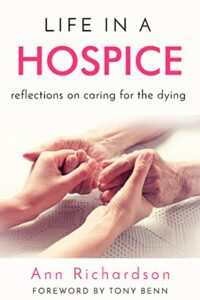
cover of Life in a Hospice by Ann Richardson,

The book Ann chose for her BookBub promotion

But a few weeks back, on a complete whim, I applied for a 99p BookBub promotion for  Life in a Hospice: reflections on caring for the dying. This isn’t a popular book. It’s certainly not crime or romance. I thought it had no chance of acceptance

But it was free to apply, so why not?

How BookBub Works

For the uninitiated, how these promotions work is that you pay BookBub a not trivial amount of money ($142 in my case, but it depends on the genre), lower your ebook price to 99c/99p on one agreed day and wait to see what happens.

Sounds counter-intuitive, but as others before me have found, it can work.

I applied for the promotion to take place solely in the UK, Canada and Australia (you can apply for the US, but the cost is considerably higher and I wasn’t brave enough). I lowered the price for a week beforehand – and did what I could to tell potential readers that I had done so.

Exceeding Expectations

BookBub said I could expect 300 sales (presumably, an average for the category) during the promotion, which sounded like an unattainable target. But in fact I sold nearly 470, about 400 on the day and the rest in the days before and after. Most were sold in the UK, but about 100 were sold in Canada and 50 in Australia.

BookBub logo

Surprise Bonuses

In addition, there were many unexpected side effects of the promotion.

  • First, the actual promotion day is very exciting, because you can clock Kindle sales in real time. You see them climb to 60, then over 100 and so on. My whole family got involved, placing bets on the final figure (my grandson won). Sales on other channels, such as Apple and Kobo, did not show up immediately, but were a delightful surprise when displayed by D2D the next day.
  • Second, and particularly important, was the huge jump in Amazon rankings. My book went up to #1 in three categories in the UK as well as elsewhere. And the overall Kindle ranking (all sales) rose amazingly. My favourite was a rank of #8 of all Kindle books in Canada. This for a serious book about hospice care!
  • Third, my books had never had much traction on platforms other than Amazon, so the Draft2Digital sales were surprising and have had some continuation since the promotion date.

Finally, perhaps less positively,it has drained my enthusiasm for the daily marketing efforts:

When you sell more books in a week than you had in the previous year, there is a slight feeling of ‘why bother?’

I hope that will change soon.

Who Dares, Wins?

So, if you are a writer, have a go. If you write in a different genre, your costs will probably be much higher, but the rewards may be as well. It is well worth applying, especially as it is free and easy to do so. Many requests are turned down, but you can apply again. Indeed, one friend applied twelve times before he got it.

Good luck.


This was originally published as a blog post by the Alliance of Independent Authors (https://selfpublishingadvice.org/book-marketing-case-study-of-a-successful-bookbub-promotion-for-a-self-published-non-fiction-book/)

Share:
Reading time: 3 min
Celebrating Grandmothers, Grandmothers

“My House is Smiling” – The Joys of Grandchildren

June 14, 2018 by Ann Richardson No Comments

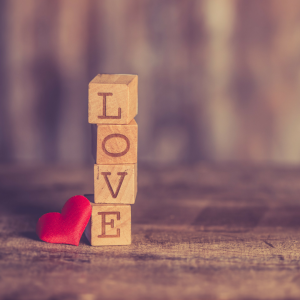
Love-Blocks

“They meet here on Diwali, Christmas – whenever there are bank holidays. The whole family gets together during school holidays, either at my or my daughter’s house. It makes me very happy when they are here. The children play around in the house or go and jump in my bed. They are enjoying my house. I feel that my house is smiling.”

…from Celebrating Grandmothers

These words, describing the sheer joy of being a grandmother, come from an Indian grandmother of four living in outer London. Most of us know what she means. Just when we had thought that having young children around was a thing of the past. suddenly we have them again in our lives. Yes, the house is smiling. And so are we.

There are so many ways we can enjoy our grandchildren, from when they are new-born right on up to teens and beyond.

New babies feel and smell so nice. A wonderful bundle to cuddle. So thrilling when they look at you with absolute pleasure. And then suddenly they are crawling and exploring everything. Yes, you do need to make the house toddler-proof, but that is a small price to pay for having little ones giggling at everything new.

And then, before you know it, they are proper little beings with their own views about your house. One of my grandsons walked up the road with a toy by accident the other day and wanted me to take it back. ‘Do you where it goes?”, he asked. I said on a shelf in the TV room. ‘But do you know which shelf?” he asked. I told him that if I put it in the wrong place, he could sort it out the next time he came.

Is it our house? Is it his? Whatever it is, the house is definitely smiling.


Would you like to read Celebrating Grandmothers?  Go to: getbook.at/Grandmothers

Initially posted on The Grandparent Hub (see http://thegrandparenthub.com/my-house-is-smiling/)

Share:
Reading time: 1 min
Page 9 of 13« First...«891011»...Last »

Recent Posts

  • Researching the Female Orgasm
  • Why do Long-Term Couples Seem to Die Close Together?
  • Follow Your Emotions
  • Thinking about the Vulva
  • How Did We Do?
Alliance of Independent Authors

 
© copyright Ann Richardson 2015-
Privacy Policy